

Update, September 27, 2026: The tariff picture has changed since this post was written. The IEEPA tariffs ended on February 24, 2026, the 10% Section 122 surcharge ran from February 24 to July 24, 2026, and a new Section 301 duty now applies to goods from many countries, including 10% on Indian goods. Each of these is applied by HTS line, so classification matters even more. See current US tariff updates. We also corrected the granite duty rates below to match the current Harmonized Tariff Schedule.
Whether you import stone, apparel, food, machinery, or industrial goods — the right HS code protects your margins. The wrong one silently erodes them.
Tariffs used to be background noise.
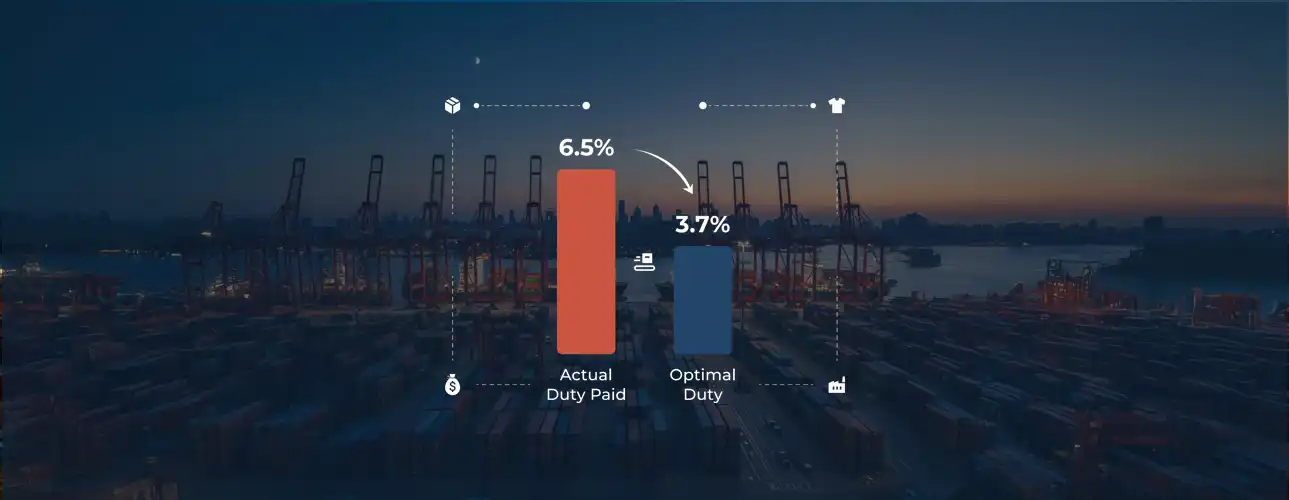
Today, HS code decisions quietly determine how much profit importers keep — and how much they hand over in duties without realizing it.
Whether you import granite, garments, packaged foods, machinery, ceramics, spices, or industrial components, your classification affects:
Duty percentage
Eligibility for trade programs
Inspection and audit exposure
Total landed cost
And in high-duty categories like stone, tile, ceramics, steel, food products, the difference between two HTS codes can mean hundreds or thousands of dollars per container — every month.
Cargo clears. Duty paid. Business continues.
But what if clearance simply means you paid more than you needed to?
Why This Matters Now (Industry Context)
In 1998, the Journal of Commerce asked 50 logistics executives to predict the future of global trade.
They talked about:
Port labor
Vessel capacity
Technology modernization
Industry consolidation
No one mentioned tariffs as a competitive factor.
Fast-forward to 2025:
Section 301 tariffs reshaped China trade
Section 232 impacted steel/aluminum imports
NAFTA evolved into USMCA with new rules
Tariff escalation conversations resurfaced
Suddenly, HS code classification isn't just documentation.
It is strategic cost management.
A Real Example: Granite Slabs
Two importers bring in similar granite slabs from India. The finish of the stone decides which HTS code applies:
| Feature | Importer A | Importer B |
|---|---|---|
| Product | Polished or otherwise surface-worked slabs | Slabs merely cut or sawn into rectangular shape |
| HTS code | 6802.93.00 | 2516.12.00 |
| General duty rate | 3.7% | 2.8% |
| Annual volume | 24 containers | 24 containers |
Heading 2516 covers granite that is only roughly trimmed or merely cut into blocks or slabs of a rectangular (including square) shape. Once the surface is polished, honed, flamed or otherwise worked, the stone moves to heading 6802. The gap of about one percentage point of customs value adds up across 24 containers a year, and both importers also pay any additional duties in force on top, such as the Section 301 duty on Indian goods.
The lesson is not to pick the cheaper code. It is to describe the product accurately, with finish, thickness and processing documented, so the correct code is used every time. Declaring polished slabs under 2516 would be misclassification, not savings. See US imports of worked stone by HTS line for how the trade breaks down.
Note: Duty rates are the general (Column 1) rates in the US Harmonized Tariff Schedule as of September 2026 — always confirm classification with a licensed customs broker.
Real-World Result
A ceramics importer reviewed their HS codes after three years.
Their licensed broker confirmed an alternative code was valid at 6% instead of 8.5%.
Annual imports: $2M
Savings going forward: ~$50,000/year
Cost to discover: One conversation and supporting documentation
Small review. Big impact.
Why Misclassification Happens (Even When Cargo Clears)
Supplier codes ≠ US codes
Export HS ≠ US HTS (see Schedule B vs. HTS).
Suppliers default to what they use — not what minimizes your duty.
Clearance ≠ optimization
CBP’s job is compliance, not cost savings.
If you declare a higher duty code that’s defensible, they will not intervene.
Brokers choose "safe" over "lowest valid"
Two defensible codes?
Most brokers pick the one with less CBP challenge risk, not the one with lower duty.
No periodic review
Products evolve.
Tariff schedules update.
CBP rulings shift.
Yet many importers keep using the same codes for years simply because: “It cleared last time.”
Industries That Commonly Overpay
| Industry category | Why it is high-risk for misclassification |
|---|---|
| Stone and ceramics | Classification turns on finish and processing (for example, merely cut vs. polished stone). |
| Industrial machinery parts | Classification often shifts based on specific function or use. |
| Apparel | Fiber composition, garment construction, and purpose all matter. |
| Food and spices | Variations in processing, labeling, and origin trigger different codes. |
| Chemicals | Rules are strict regarding purity and intended use. |
| Packaging | Classification can differ based on material vs. final application. |
If you import in these categories, review frequency matters.
What Savvy Importers Do
Validate before first shipment. Collect composition, use, and manufacturing details. Ask the broker to evaluate multiple HTS codes.
Document the logic. If you ever need to defend it — proof helps.
Review annually. Especially after tariff schedule updates or product changes.
Ask the right question. “Is this the correct code, and is it the lowest defensible duty rate?” That one line can change outcomes.
Five Questions to Ask Your Broker
When were our HS codes last reviewed?
Were lower-duty alternatives evaluated?
Any new CBP rulings related to our products?
Is this code selected for compliance safety or duty efficiency?
Do you proactively monitor duty changes for our category?
If the answer to #5 is “only when asked,” that’s a sign to take a more active role.
Where Forwarders Fit In
Freight forwarders don’t classify — licensed customs brokers do.
But strategic forwarders DO:
Flag classification as a cost lever
Encourage early tariff planning
Connect importers with proper compliance expertise
Build landed-cost visibility alongside freight planning
Saving $2,000 in ocean freight but losing $50,000 in duties isn’t optimization. It’s a blind spot.
A 15-Minute Action Plan
Monday Morning Checklist
Pull last 10 commercial invoices
Note the HTS codes used
Check the duty rates in the official US Harmonized Tariff Schedule (hts.usitc.gov)
Email your broker:
“Can you confirm whether alternative HTS codes exist for these products and whether duty outcomes differ?”
Even a single product change can matter.
The Mindset Shift
The old freight playbook valued:
Rates
Capacity
Reliability
The new one adds:
Landed cost intelligence
HS codes sit squarely in that bucket.
Not because forwarders replace brokers —
but because smart logistics protects margins end-to-end.
Thinking beyond freight?
If you're importing stone, garments, food, machinery, or mixed‑cargo to the USA, the logistics strategy isn’t just about moving boxes — it’s about managing total cost.
With the right visibility into equipment planning, shipment routing, and duty mechanics, you shift from reacting to being in control.
Want to start reviewing your duties?
Talk to our team about a landed-cost review. We connect you with licensed customs broker partners for the classification itself.
More in this heavy-cargo series
Get a quote for your shipment
Have a shipment to move? Send the origin, destination, cargo, and container size or weight. We reply with the rate, the routing and the services included.
